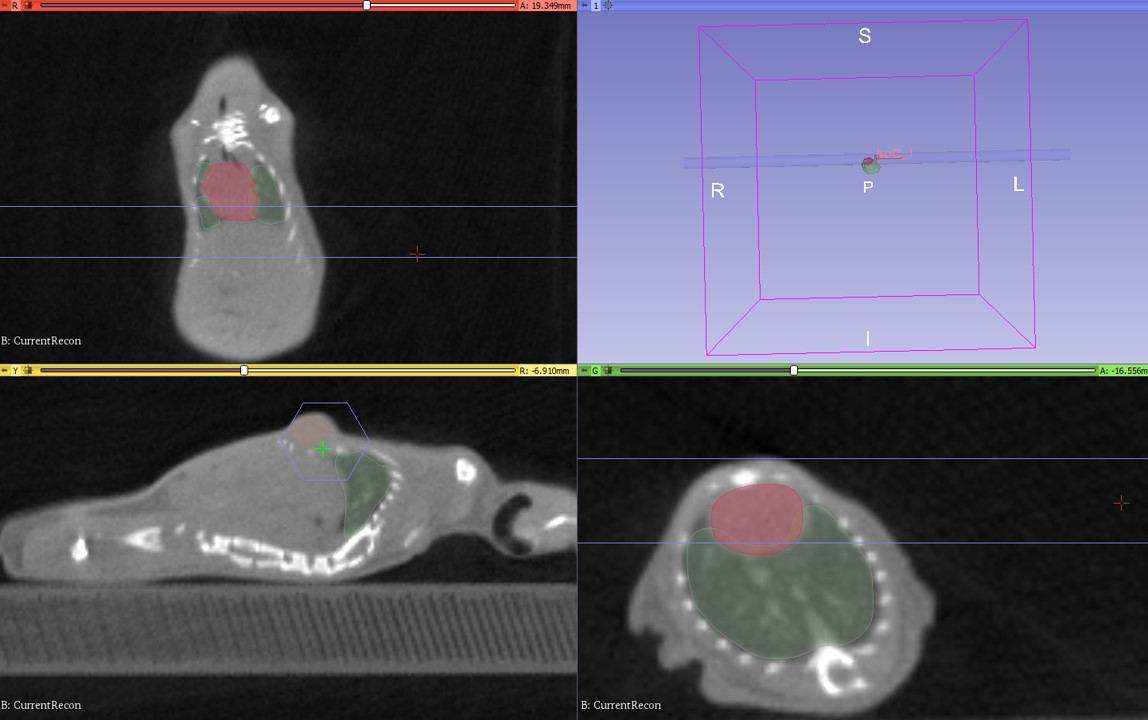
Sparing normal tissue improves treatment only if tumor control is maintained. Across most of the tumor models we have tested, F-PRT is as effective as S-PRT at the same dose. Tumor growth inhibition is equivalent in pancreatic tumors, sarcomas (including an orthotopic intramuscular model), and melanoma. In orthotopic head and neck tumors, F-PRT did not compromise tumor control and improved survival.
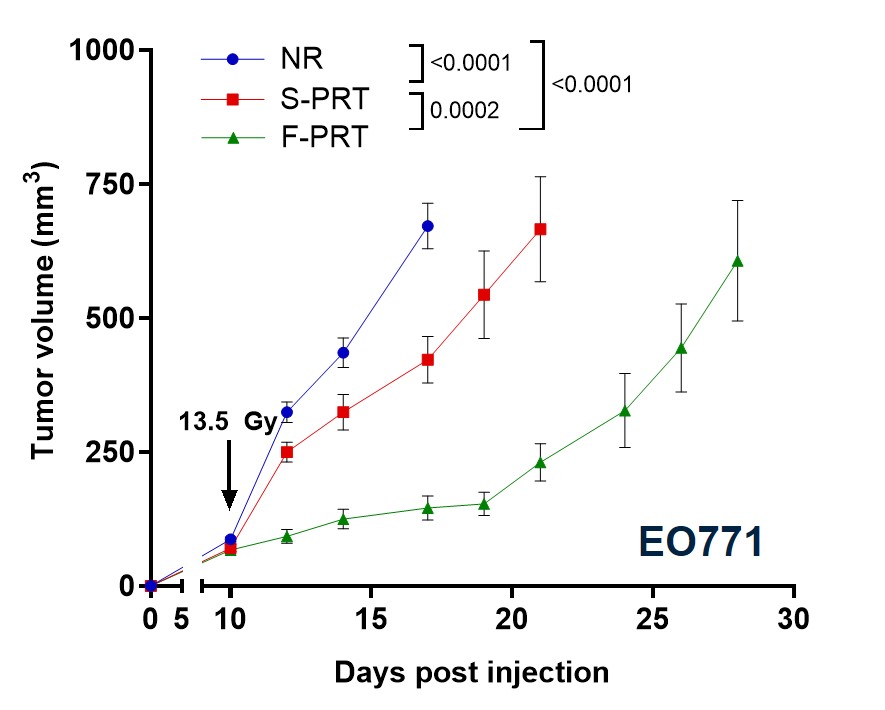
Our work in triple-negative breast cancer suggests the benefit may extend further. In syngeneic, immunocompetent mouse models of TNBC, a single 13.5 Gy proton dose delayed tumour growth more when delivered at FLASH dose rates than at standard dose rates, at both heterotopic and orthotopic sites, with longer survival and fewer lung metastases in the more responsive model. F-PRT induced earlier intratumoral STING expression and IRF3 nuclear translocation, higher type I interferon levels, and greater CD8+ T-cell infiltration. Depleting CD8+ T cells or inhibiting STING abolished the advantage, indicating that the improvement depends on an antitumor immune response rather than on greater direct cell killing. Combined with anti-PD-1 and agonistic anti-CD40, both dose rates produced durable complete responses that rejected rechallenge. These findings suggest that ultra-high dose rate delivery may widen the therapeutic window from both sides, improving normal-tissue tolerance and antitumor immunity at once.
This raises the question of whether FLASH allows more effective treatment more broadly. We are testing whether higher doses can be delivered to tumours without added toxicity, including dose-escalation studies in lung tumour models, and how F-PRT performs in combination with other therapies. Because F-PRT also better preserves circulating lymphocytes, we are examining whether this contributes to the stronger intratumoral immune response and whether it improves the efficacy of immunotherapy. We are also investigating why tumours do not share the protection seen in normal tissues, which is central to understanding the FLASH effect and to selecting the patients most likely to benefit.